Taming Chronic Inflammation | Dana-Farber Cancer Institute

Andrea Antino was living a healthy, balanced life. She'd been a vegetarian for 30 years, exercised regularly, and juggled a full schedule with her husband and three kids. So when a routine colonoscopy at age 50 revealed stage 3 colon cancer that had spread to her lymph nodes, she was stunned.  
"I had no symptoms," Antino said. "It was a complete shock."
During treatment, Antino wondered whether there were things she could do to help prevent her cancer from coming back. With the help of a nutrit...

Sickle-cell disease associated with early onset of clonal hematopoiesis, a precancerous condition | Dana-Farber Cancer Institute

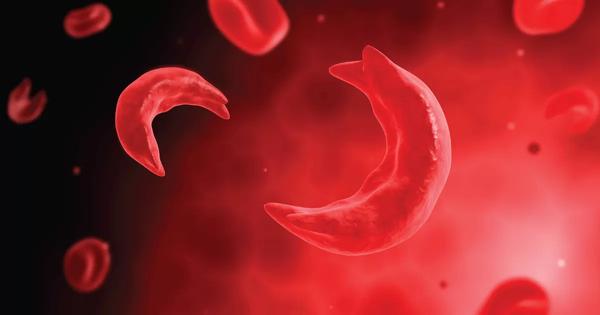
The discovery, led by researchers at Dana-Farber, could pave the way for interventions to reduce the risk of blood cancers among people with sickle-cell disease. A large-scale genomic analysis, led by investigators at Dana-Farber Cancer Institute, has uncovered a strong association between sickle-cell disease and the early development of clonal hematopoiesis, a precancerous condition known to raise an individual’s risk of certain blood cancers.  
The findings may explain why some people with sic...

How families of children affected by chordoma are driving hope and…

Photo: Sloane SwantonChordoma in children and young adults can be aggressive, and better treatments are urgently needed for this unique population. At the Chordoma Foundation, we’re advancing pediatric chordoma research and providing free, personalized guidance to help families access expert care and treatment for children diagnosed with this disease — all made possible by the generosity and fundraising efforts of families affected by chordoma.
This Childhood Cancer Awareness Month, we’re proud...

India’s First Homegrown CAR T-Cell Therapy

February 7, 2024,
by Linda Wang


In 2015, Alka Dwivedi, then a graduate student at the Indian Institute of Technology (IIT) Bombay, began wondering whether a CAR T-cell therapy could be made in India.

At the time, several CAR T-cell therapies—a type of immunotherapy in which a person’s T cells are modified in a laboratory to selectively kill cancer cells—were being tested in clinical trials in the United States. And although CAR T-cell therapies looked to be promising trea...

How Cancer Disrupts Sleep and What You Can Do About It

Rest is one of the body’s most powerful tools for healing. Yet, for many people with cancer, and even survivors years later, a good night’s sleep can feel out of reach. “Sleep is foundational for our health,” said Oxana Palesh, PhD, MPH, a professor of psychiatry at Virginia Commonwealth University’s Massey Cancer Center in Richmond. “Having insomnia or any type of sleep disruption may affect how well a patient tolerates treatments and what side effects they're going to have.”According to the Am...

New opportunity for chordoma patients to advance treatments

Photo: Marshall BradyWe’re excited to share an important new opportunity for chordoma patients, particularly those treated at Mass General Hospital.
If you’ve been treated at Mass General Hospital:
If you received any part of your chordoma treatment at Mass General Hospital (MGH) or the Harvard Cyclotron Laboratory (now the Francis H. Burr Proton Therapy Center) after 1980, researchers at MGH would like to hear from you.
Dr. Myrsini Ioakeim-Ioannidou has launched a new research project to bette...

Five-drug combination targets aggressive B-cell lymphomas

Researchers at the National Institutes of Health (NIH) have developed a non-chemotherapy treatment regimen that is achieving full remissions for some people with aggressive B-cell lymphoma that has come back or is no longer responding to standard treatments. The five-drug combination targets multiple molecular pathways that diffuse large B-cell lymphoma (DLBCL) tumors use to survive.In a clinical trial at NIH’s National Cancer Institute (NCI), researchers tested the combination of venetoclax, ib...

Antibiotic Resistant Superbugs Always a Risk for Cancer Patients

As if battling cancer weren’t challenging enough, an invisible threat is making cancer care even more complicated: antimicrobial-resistant superbugs that are increasingly hard to treat. A large study published in May 2025 in The Lancet Oncology found that people with cancer who received care in outpatient settings – like a doctor’s office or surgical center – were much more likely to get drug-resistant bacterial infections compared to people without cancer treated in similar settings.“That surpr...

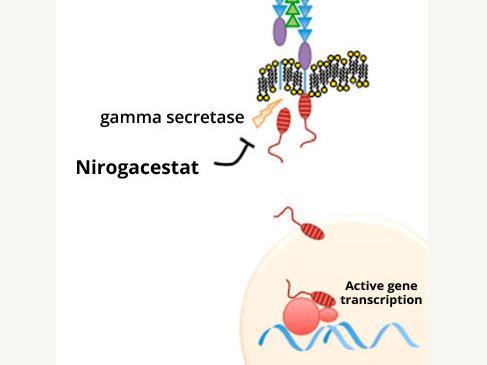
Nirogacestat Shrinks Desmoid Tumors

May 1, 2023,
by Linda Wang


UPDATE: On November 27, 2023, the Food and Drug Administration (FDA) approved nirogacestat (Ogsiveo) for adults with desmoid tumors that are growing and cannot be removed surgically. This is the first-ever FDA approval of a treatment for people with desmoid tumors.

The approval was based on results of the DeFi trial, which showed that nirogacestat was effective in shrinking desmoid tumors. Details on the trial results are discussed in the stor...

Kids with High-Risk Neuroblastoma Benefit from Dinutuximab

September 6, 2022,
by Linda Wang


In a clinical trial of nearly 1,200 children with high-risk neuroblastoma, researchers have confirmed that the immunotherapy drug dinutuximab (Unituxin) can help children live longer.

Five years after being treated with dinutuximab, given along with two immune-boosting compounds and isotretinoin, 72% of children in the study were still alive and 61% had no evidence that their cancer had come back or their tumors had grown.

The study resul...

Advanced Cancer Long Term

Issues that affect living with advanced cancer

Living with advanced cancer long term comes with ups and downs. People may struggle with a number of issues that can affect their quality of life. Common challenges may include:

coping with uncertainties of when treatments and medicines might need to change
worrying about your health
dealing with ongoing or changing side effects
scheduling regular tests and other medical appointments
having money worries
keeping a balance with daily l...

Cancer risk decreases with more physical activity

In a prospective cohort study of more than 85,000 adults in the United Kingdom, researchers at the National Institutes of Health (NIH) and University of Oxford found that individuals who engaged in light- and moderate-to-vigorous-intensity daily physical activity had a lower risk of cancer than individuals who were more sedentary. The findings, published March 26, 2025, in British Journal of Sports Medicine, are among the first to evaluate the cancer risk reduction associated with light-intensit...

Immunotherapy effective for lymphomatoid granulomatosis

Results from a clinical trial conducted by researchers at the National Institutes of Health (NIH) show that people with low-grade lymphomatoid granulomatosis who are treated with interferon alfa-2b, a type of immunotherapy, can live for decades after diagnosis. Lymphomatoid granulomatosis is a rare precancerous condition triggered by Epstein-Barr virus infection. Left untreated, the disease can progress to a high-grade form, which has a poorer prognosis and can quickly turn into an aggressive an...

Rapid Growth in Telehealth for Cancer Care

March 9, 2022,
by Linda Wang


After their 7-year-old daughter Eva was diagnosed with advanced Wilms tumor in 2020, Chris and Alicia LaBonne sought out a second opinion on Eva’s treatment from doctors at Vanderbilt-Ingram Cancer Center (VICC) in Nashville. But instead of making the two-and-a-half-hour drive from their home in Chattanooga to Nashville for an office visit, the LaBonne family hopped on a video call with a pediatric oncologist at VICC. 

“When your child is goin...

New breast cancer tissue biomarker

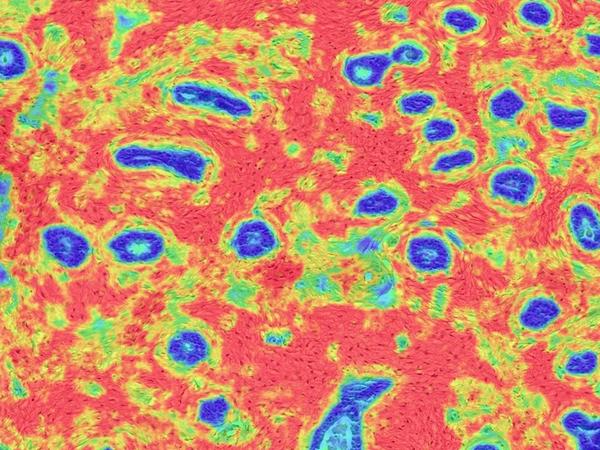
Researchers at the National Institutes of Health (NIH) have identified a series of changes in the architecture and cell composition of connective tissues of the breast, known as stromal tissue, that is associated with an increased risk of developing aggressive breast cancer among women with benign breast disease, and poorer rates of survival among women with invasive breast cancer. This process, which they call stromal disruption, could potentially be used as a biomarker to identify women with b...

ComboMATCH will test new combinations of cancer drugs

The National Cancer Institute (NCI) has launched a large precision medicine cancer initiative to test the effectiveness of treating adults and children with new drug combinations that target specific tumor alterations. Known as the Combination Therapy Platform Trial with Molecular Analysis for Therapy Choice (ComboMATCH), the initiative is the largest of its kind to test combinations of cancer drugs guided by tumor biology. The endeavor aims to identify promising treatments that can advance to l...

Bizengri Approved to Treat Some Lung, Pancreatic Cancers

March 26, 2025,
by Linda Wang


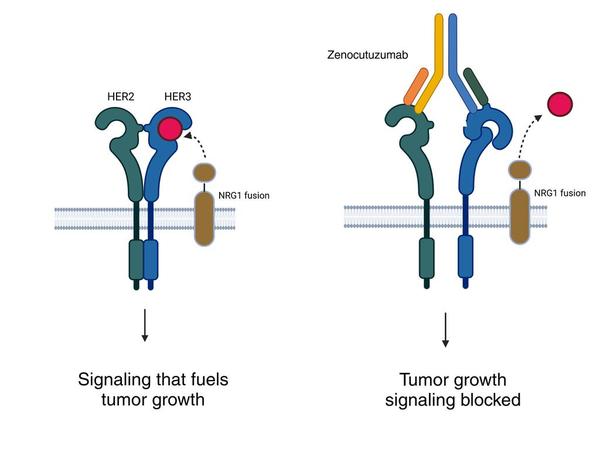
The Food and Drug Administration (FDA) has given an accelerated approval to zenocutuzumab (Bizengri), making it the first drug that targets tumors with a very rare genetic alteration called an NRG1 fusion. Under the approval, zenocutuzumab can be used to treat people with pancreatic or non-small cell lung cancer (NSCLC) whose tumors have an NRG1 fusion and whose disease has gotten worse despite standard treatments.

The approval was based on t...

Proteogenomics Study Identifies Cancer Drug Targets

September 11, 2024,
by Linda Wang


Most targeted cancer drugs work by blocking proteins in or on cancer cells that help tumors grow. But the process of identifying promising proteins to target can be painstaking and often leads to false starts and dead ends.

Now, a team of researchers from the United States and China has identified hundreds of proteins that appear to be either promising targets for existing drugs or leads for the development of new cancer treatments. 

The...

Atezolizumab Shrinks Alveolar Soft Part Sarcomas

October 20, 2023,
by Linda Wang


Faithanne Hill was only 11 when she was diagnosed with alveolar soft part sarcoma, an extremely rare soft tissue cancer that is diagnosed in only about 80 people (mostly adolescents and young adults) in the United States each year. Now 21, the first-year college student has been through a lot over the past decade. 

In addition to going through the usual teenage experiences in her home country of Trinidad, she’s also had a half dozen or so s...

Undocumented students remain in the shadows of the chemical sciences

Jorge Steven Acuña was lying in bed on the morning of March 7, 2012, thinking about the organic chemistry exam he had to take later that day.


“I was going through reactions in my head as I was waking up, and all of a sudden, my dad comes into my room, and he’s crying,” says Acuña, who at the time was a student at Montgomery College in Rockville, Md. “Behind him were these two huge ICE [U.S. Immigration & Customs Enforcement] officers. T...

Opening Up About Stress In Graduate School

Like many graduate students, Karen Chiang entered her Ph.D. program full of enthusiasm, and she looked forward to earning her scientific wings.


But instead, graduate school became associated with some of the lowest points in her life, because of the overwhelming stress and self-doubt she experienced. “I had a very difficult time seeing myself in a positive light,” says Chiang, who earned a Ph.D. in chemistry recently and is now teaching...
Load More